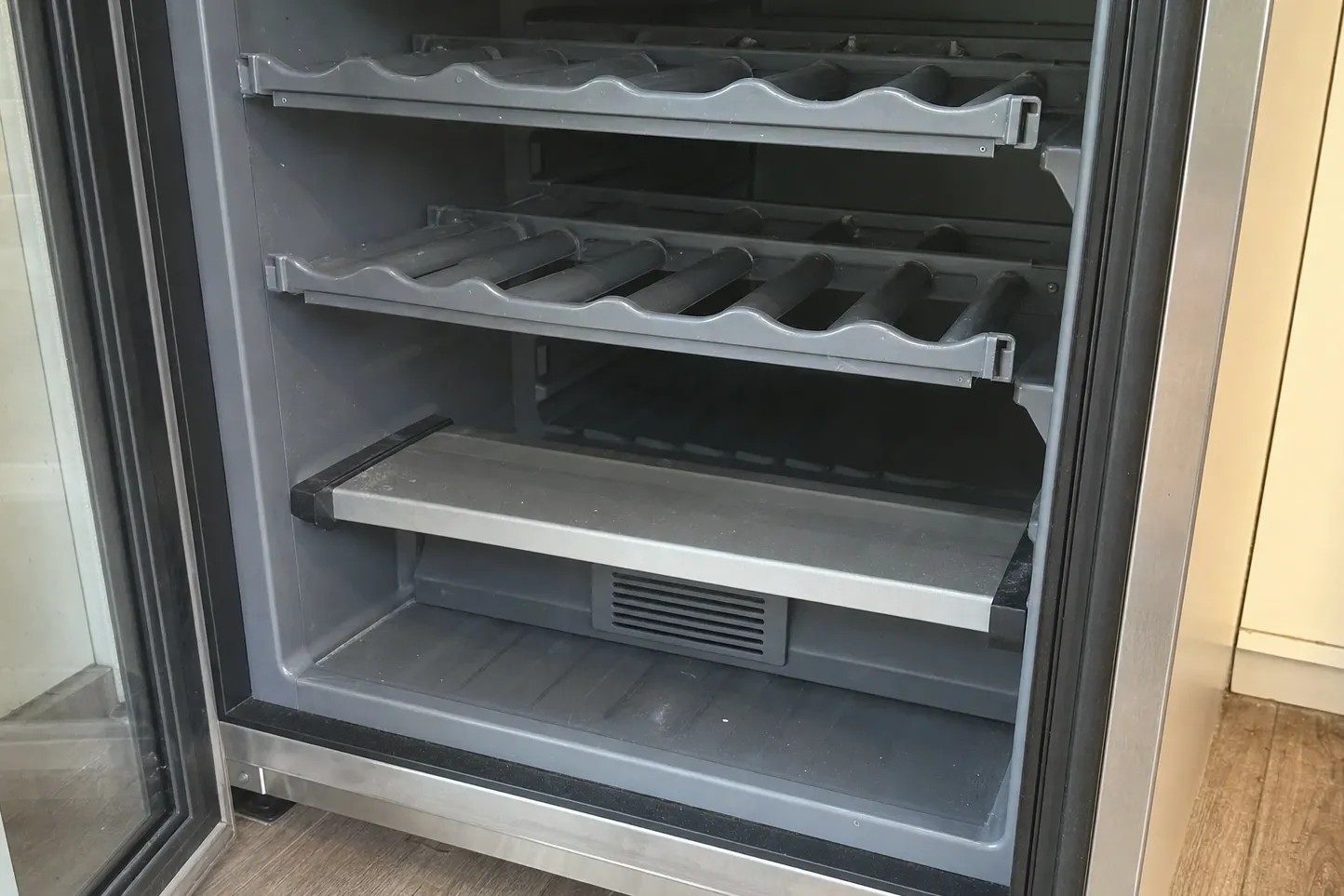
Refrigerator Repair
Why Your Sub-Zero Fridge Smells When You Open the Door
A fridge smells when you open it because the sealed, cold cabinet traps odor from a source you have not found yet: a hidden spill, a mildewed gasket, a stale defrost drain, old ice or a spent air cartridge. Here is how Phoenix owners track it down.
Written by
Warren Ibarra
Refrigeration technician — condenser and heat-load work · 20 years in the trade
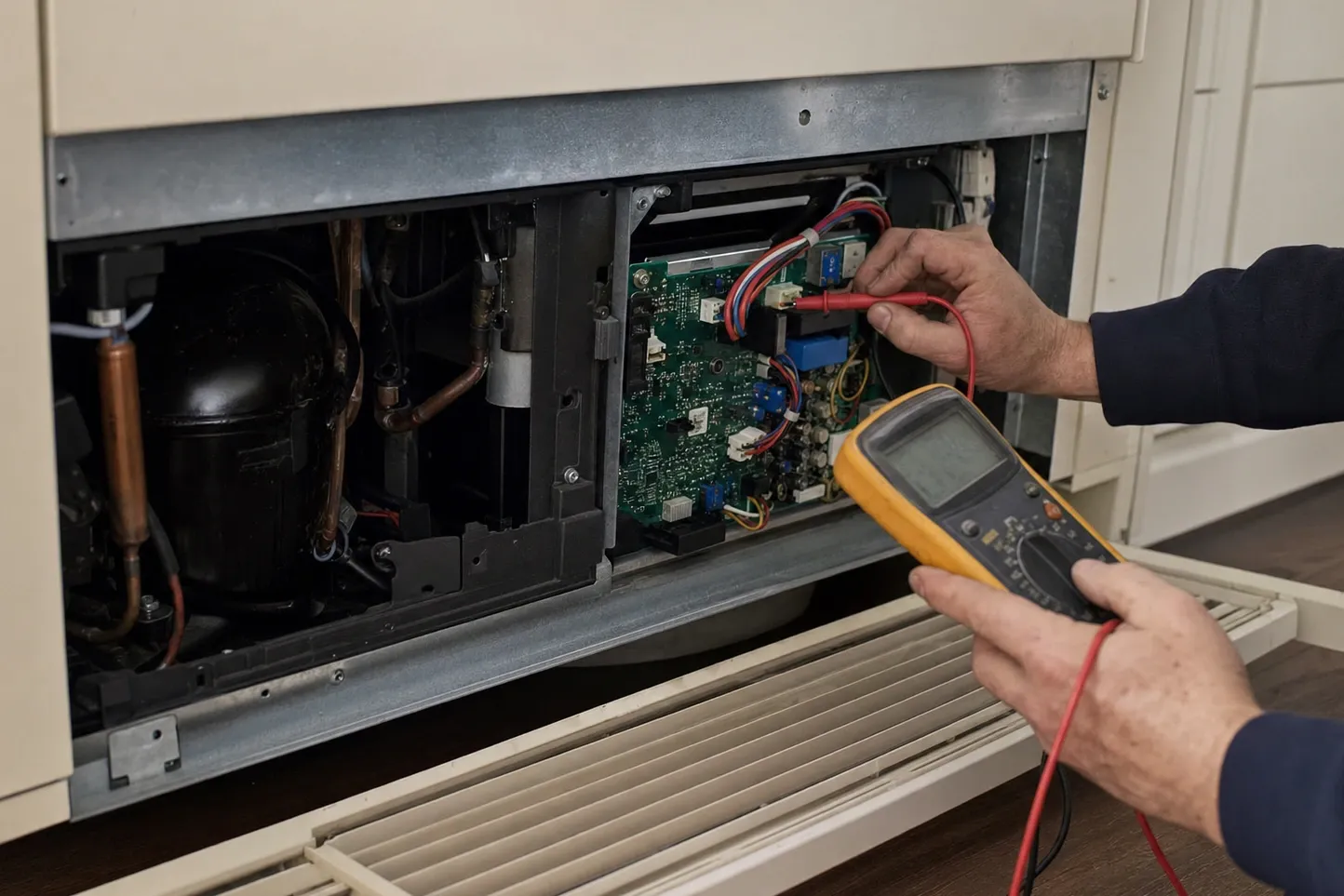
A fridge smells when you open it because bacteria and mold are feeding on something out of sight, and the sealed, cold cabinet holds that air until the door lets it out in one breath. The usual culprits are a spill that crept under a crisper drawer, mildew in the folds of the door gasket, standing water in a blocked defrost drain, ice that has absorbed every nearby smell, or an air purification cartridge long past its year. One cause is easy to miss: a cabinet running a few degrees warm, so food sours early. In Phoenix, where summer afternoons regularly pass 110 degrees, a built-in can lose ground slowly enough that your nose notices before any thermometer does.
Follow your nose to the right zone
Sniff at each door and drawer in turn; the strongest spot points to the culprit:
- Fresh-food section, all over — a hidden spill, an overdue air cartridge, or food turning early because the box is warm.
- Along the door edge — the gasket.
- Low in the cabinet, or at the grille or kickplate — the defrost drain, its pan, or a dusty condenser.
- Only in the ice or water — the ice bin and the water filter.
- Sharp, chemical or hot — a new liner, leftover cleaner, or an electrical part running hot.
Hunting the spill nobody saw
A leaking package of chicken or tipped pickle brine runs along a shelf track and pools under a drawer, where a quick wipe-down never reaches. Pull every drawer and removable shelf and check the undersides and rear corners.
Wash the interior the way Sub-Zero asks: soap, water and a little baking soda on a soft cloth, never vinegar or alcohol-based cleaners. If the smell returns within days, the source is still in there.
The door gasket
The seal around each door has folds deep enough to trap crumbs, condensation and eventually gray or black mildew. With the unit switched off, clean each fold using a soft cloth dampened with water and a little mild detergent. Baking soda mixed to a paste lifts stubborn marks, and for settled-in mold or mildew Sub-Zero’s instructions call for one part bleach to ten parts water (1:10). Leave the vinegar and rubbing alcohol under the sink for this one. A ripped, torn or cracked seal has to be replaced; Sub-Zero recommends a technician fit it and sells gaskets only through its parts distributors. Expect a typical $290–$650 for that, with the firm price set after diagnosis.
The air purification cartridge
Many Sub-Zero refrigerators have an air purification system. Every 20 minutes its cartridge clears ethylene and odor from the cabinet air (the design draws on NASA research), and one cartridge lasts about a year. The current part is 7042798, a direct replacement for 7007067; it fits all models with the system and is the only air filter inside. Its small mercury lamp means the old one goes out under local disposal rules, not in the trash.
When the bottom or the back smells
A sour, swampy smell low in the unit, while the shelves smell clean, usually traces back to defrost water. Meltwater from each defrost runs down a drain to a pan near the compressor, where machine heat evaporates it. A scrap of food or a plug of ice in that drain leaves water standing in the cabinet to go stale, and a pan full of sticky drips grows a film. A drain that keeps freezing shut often means a defrost heater, thermostat or sensor is failing, typically a $300–$670 repair once confirmed.
Dust adds its own odor. Lint, pet hair and the fine grit a monsoon dust storm drives under every Phoenix door collect on the condenser fins, and warmed dust smells scorched. Sub-Zero’s schedule for this is once per six to twelve months, with pet owners leaning to the short end; a unit under 6 months old can skip it. Classic (CL) owners find the condenser under the flip-up grille, while Designer (DET, DEC) owners take off a two-screw kickplate. Shut the unit down at its control panel, wear gloves, and run a soft vacuum brush in the same direction as the fins so the aluminum stays straight. Sub-Zero says chemical condenser cleaners are not needed and not recommended.
Ice, water and the filter
Ice soaks up odors from whatever sits near it, so a bin left alone for weeks can taste of last week’s leftovers. Empty it, wash and dry it, and let the ice maker start over. If new cubes still taste musty, check the water filter. Classic (CL) and Designer (DET, DEC) owners should plan on a new cartridge once 750 gallons (2,839 L) of water have passed through it or after twelve months in place, and sooner if the indicator lights, water pressure falls or cubes turn hollow. After fitting a fresh one, dump the first two full bins from a non-dispenser model, run a dispenser model’s water for two minutes, or discard the UC-15I’s first batch. If the taste lingers, our ice maker repair page covers the fill valves, drain pumps and bin sensors we check next.
Chemical, plastic or burning smells
A faint plastic smell in a new unit fades after a soap, water and baking soda wash; a chemical edge after cleaning is residue that plain water removes. A hot or burning smell from the grille is different: keep the unit switched off until someone looks, since a failing condenser or evaporator fan motor can overheat before it quits. Replacing one typically costs $340–$650.
When the smell means the box is running warm
Food that sours before its date or milk that turns in four days is a temperature fault dressed up as a hygiene problem. Leave a thermometer standing in a cup of water on a middle shelf and check it after the cabinet has been closed all night. If the control says 38 and the water says anything over 48, Sub-Zero’s troubleshooting advice is that cleaning the condenser probably will not rescue it, and a service call is the next step.
EC50 with Service flashing on the panel means the compressor has run excessively. With temperatures still near normal, a condenser cleaning plus a 15-second press on the bell key (it controls the door-ajar alarm) should clear the code; with temperatures already high, call instead. Sealed-system work, the costly end, typically runs $1,500–$3,310; our guide to why a Sub-Zero stops holding cold in Phoenix heat covers the summer side.
Getting a stubborn smell diagnosed
If the smell keeps coming back after cleaning, drying and replacing what you can, the cause is mechanical. Sub-Zero Repair Service Phoenix works on built-in, integrated and undercounter Sub-Zero refrigeration in Estrella, Alhambra, South Mountain and Garfield. The visit costs a flat $89 including the full diagnosis, and that fee is folded into the repair price once you say yes to the work. Ring (623) 323-6690 and say where the smell is strongest, or see what we inspect on our refrigerator repair page.
Follow-up questions
- Why does my fridge smell when there is nothing in it?
- Because the odor has settled into surfaces rather than food: gasket folds, shelf tracks, the defrost drain, the ice bin or an overdue air cartridge. A unit left off with its doors shut also grows mildew, which is why Sub-Zero says to prop the doors slightly open before a long absence.
- Why does the back or bottom of my refrigerator smell when the inside is clean?
- Defrost water or dust is the usual answer. Meltwater that cannot drain goes stale in the bottom of the cabinet, the drip pan can grow a sticky film, and lint on a warm condenser smells scorched. A drain that keeps refreezing needs a technician.
- What are the signs of a refrigerator that is starting to fail?
- Early spoilage, a compressor that hardly ever rests, new frost or sweating, and a warm thermometer reading are the common signs. A cabinet holding above 48 while set to 38 is past what condenser cleaning can fix, so book service.